Showing posts with label american literature. Show all posts
Showing posts with label american literature. Show all posts
Saturday, August 2, 2014
A note on Henry James's The Princess Casamassima
I want to say, first, that I love Henry James's writing. I have read all but two of his novels, some of them several times, and I've assigned, in different courses, The American, Portrait of a Lady, The Bostonians, and The Ambassadors. So I'm not one of those people who dismisses James's work as boring or narrow in focus.
And yet, I recently finished reading The Princess Casamassima (1886) for the fourth time, and the further I read in it this time, the more I was struck by one thing: it's not a very good novel. For some of you, that may be an insight you came to, say, 150 pages into your first attempt at reading it. Those who write about James would most likely rank it as one of the least successful novels he wrote. I did not see it quite so clearly the first couple of times through, because there is so much in it that is really interesting. In fact, I've been working on an essay on the novel precisely because I think it raises very interesting ideas about cities. But what really hit me was this: just because a novel has many interesting ideas/characters/scenes doesn't mean it's a good novel. Again, that will seem like an obvious statement for many, but it emphasizes for me the fact that people who are in the field of literary studies often evaluate novels and other creative work based on what is interesting in it to us, not on whether it is actually good, very good, excellent, or not worth reading at all.
The main character, Hyacinth Robinson, is recruited into a radical group and agrees to do some kind of terrorist act at some indeterminate point in the future when asked. In between these points in the novel, he befriends radical Paul Muniment, falls in love with Princess Casamassima, wonders about whether he loves his childhood friend Millicent Henning, and then finds out that he has been thrown over with the Princess by Paul, and with Millicent by Captain Sholto. I won't spoil the ending if you haven't read it (though, of course, I'm saying here that it's not a good novel, so you probably won't read it). It's pretty thin as plots go, especially for a novel that ran to 15 or 16 months in serial form, and 600 pages in book form. The novel is more a collection of notes and sketches of the city and those who inhabit it, and the last 100 or so pages feel like James has run out of ideas for the novel, but extends the narrative anyway.

Wednesday, June 25, 2014
Portrait of a Novel -- Michael Gorra
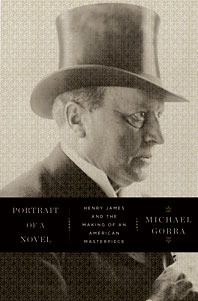 Henry James holds an interesting place in American culture (even though I just mentioned Henry James, please keep reading!!!). I have never taught a student who actually read, let alone enjoyed, one of James's late novels such as Golden Bowl or The Ambassadors. Mention James to most faculty members in an English department, and they will act like you just dropped a stinky diaper in the middle of the room. Someone is buying his more difficult novels, but it's not clear whether anyone reads beyond page 20. And yet, people have been willing to go to the movie theatre to watch Nick Nolte play Adam Verver in Golden Bowl, or Helena Bonham Carter play Kate Croy in Wings of the Dove. Clearly there is something about the stories Henry James created that resonates with filmakers and moviegoers. People just don't want to push through James's complicated, sometimes impenetrable, sentences to get to that something.
 The James novel that many readers enjoy is The Portrait of a Lady (also a movie, with Nicole Kidman and John Malkovich). It's certainly one of James's best novels, in part because his style is still accessible. In his book Portrait of a Novel: Henry James and the Making of an American Masterpiece, Michael Gorra offers a biography of the novel, tying the novel to James's own life and to the historical context in which he wrote the novel. It is an interesting, persuasive explication of the novel, but Gorra accomplishes a more difficult feat. He has written a book of criticism on Henry James for a lay audience, without sacrificing complexity or nuance.
Gorra's book helps explain the appeal of James to a contemporary audience, and shows readers why James is relevant. He also gives the reader an excellent, condensed biography without explicitly writing a biography of Henry James. Academic biographies of Henry James are typically large, multi-volume works. Just looking at those books on display in a bookstore would send most readers running for something a little more, let's say, manageable. Someone who reads Gorra's book will come away with a good sketch of James's life, and the people who were important to him. It's a good read, and worth reading.
Subscribe to:
Comments (Atom)